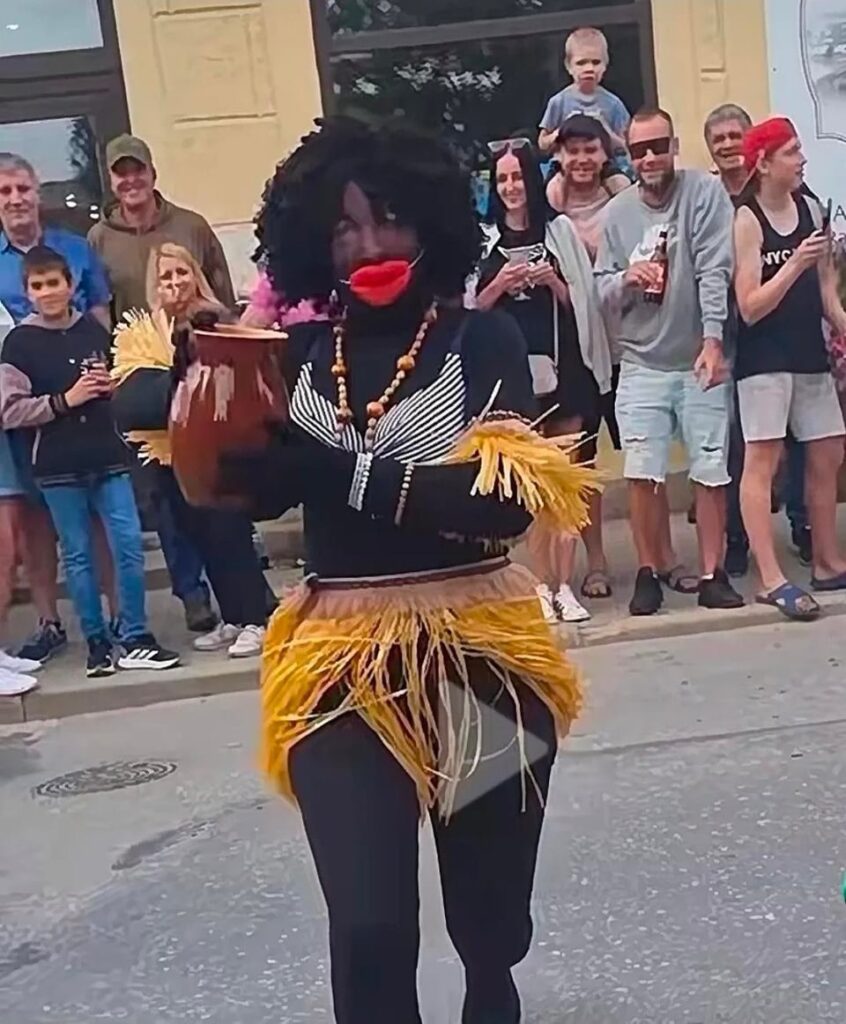
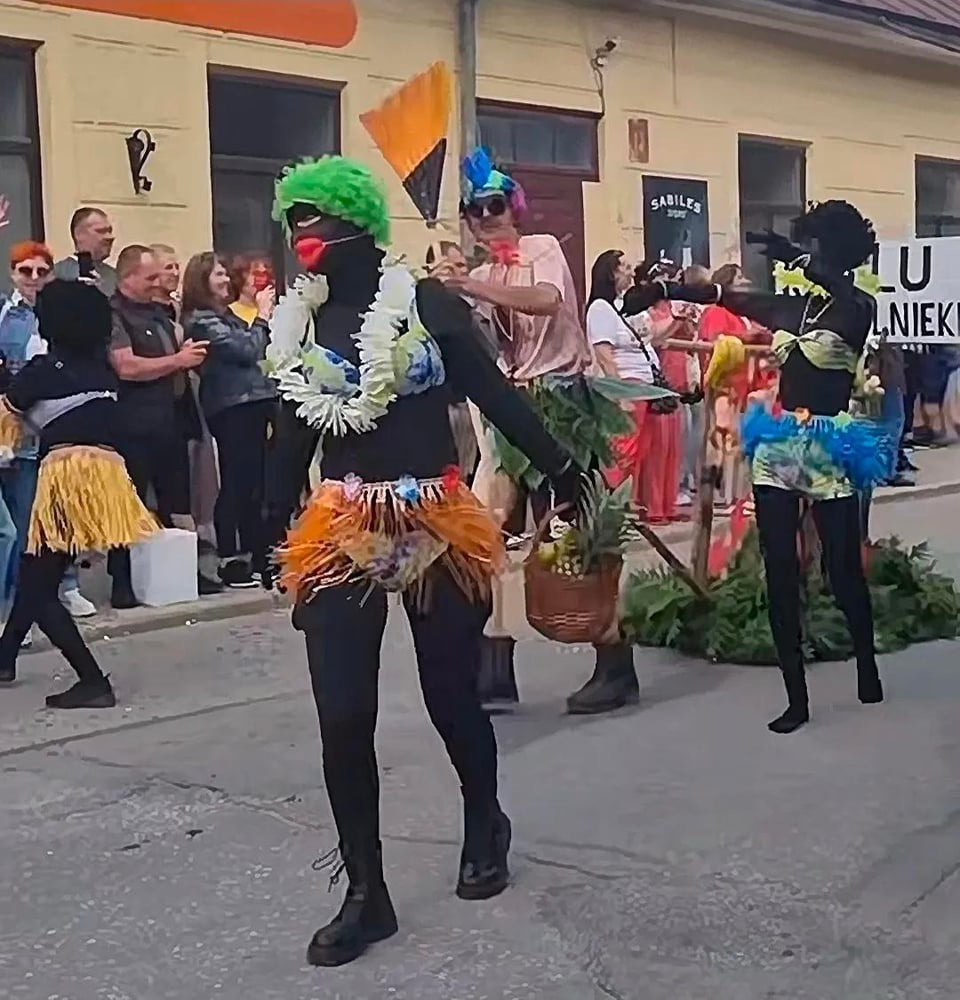
What happened in Latvia? Black and colored people were Publicly and Officially mocked and making fun rally
In late July 2026, videos from the annual Sabile Wine Festival (Sabiles Vīna svētki) in the small Latvian town of Sabile went viral on social media, particularly on X (formerly Twitter). The footage shows festival participants with their faces painted brown or black (brownface and blackface), dressed in costumes parodying Indian food-delivery drivers.
Many wore turbans or fake facial hair, carried delivery boxes marked in a style mimicking apps like Bolt Food, rode scooters, bicycles, or even tractors, and acted out exaggerated scenes of preparing or delivering street food. This took place as part of the festival’s traditional costume parade and procession.
The 27th edition of the Sabile Wine Festival was held on July 25–26, 2026, in Talsi municipality. The event celebrates Sabile’s Wine Hill (Vīna kalns), once listed in the Guinness World Records as one of the northernmost vineyards in the Northern Hemisphere. The program typically includes concerts, wine tastings, a craft market, sports activities, and a festive procession through the town.
Local videos and posts described chaotic, lively scenes with children on vehicle roofs, scooters weaving among tractors, and the costumed group standing out amid the celebrations. Latvian accounts noted participants “painting themselves black and mocking migrants,” while progressive voices quickly labeled the displays racist.
Social Media Reaction
International users amplified the clips, with posts describing the costumes as “brownface” mockery of Indian delivery workers and street-food vendors. Some called for diplomatic complaints to Latvian and Indian authorities. Critics framed it as public stereotyping of South Asian and other non-white migrants who form a visible part of Latvia’s gig-economy workforce, especially food-delivery riders.
Defenders and local commenters treated it as irreverent small-town humor or carnival-style costume play, arguing that progressive outrage over “racism” was overblown and disconnected from everyday Latvian life. One former Latvian interior minister noted that many Sabile residents are generally good-natured but may not link such “humor” to real-world hostility toward delivery couriers in Riga.
No official statement from festival organizers condemning or endorsing the specific costumes has been widely reported. A local tourism page posted a positive wrap-up thanking participants and celebrating the town’s wine traditions.
Context in Latvia
The episode occurs against a backdrop of growing numbers of migrant workers from South Asia and Africa in Latvia’s delivery and service sectors. Debates over immigration, cultural integration, and occasional incidents involving couriers have featured in local media and politics. Surveys and reports have previously highlighted higher levels of prejudice in Latvia toward certain distant ethnic or racial groups compared with more familiar minorities.
Importantly, the displays were the actions of individual festival-goers during a public cultural event, not a government-organized or state-sanctioned program. There is no evidence of official Latvian authorities directing or formally approving racial mockery. The “public” element is clear from the open parade setting; the “official” framing in some online commentary overstates the role of institutions.
As of July 27, 2026, the videos continue to circulate, fueling polarized online discussion about free expression at traditional festivals, the limits of parody, and attitudes toward recent immigration in the Baltic state. The Sabile Wine Festival itself remains a longstanding local tradition focused on wine, community, and celebration rather than politics.