Gen Z Less Intelligent Than Millennials
Gen Z Less Intelligent Than Millennials: Neuroscientist Testimony Reveals Shocking Reverse Flynn Effect and IQ Decline
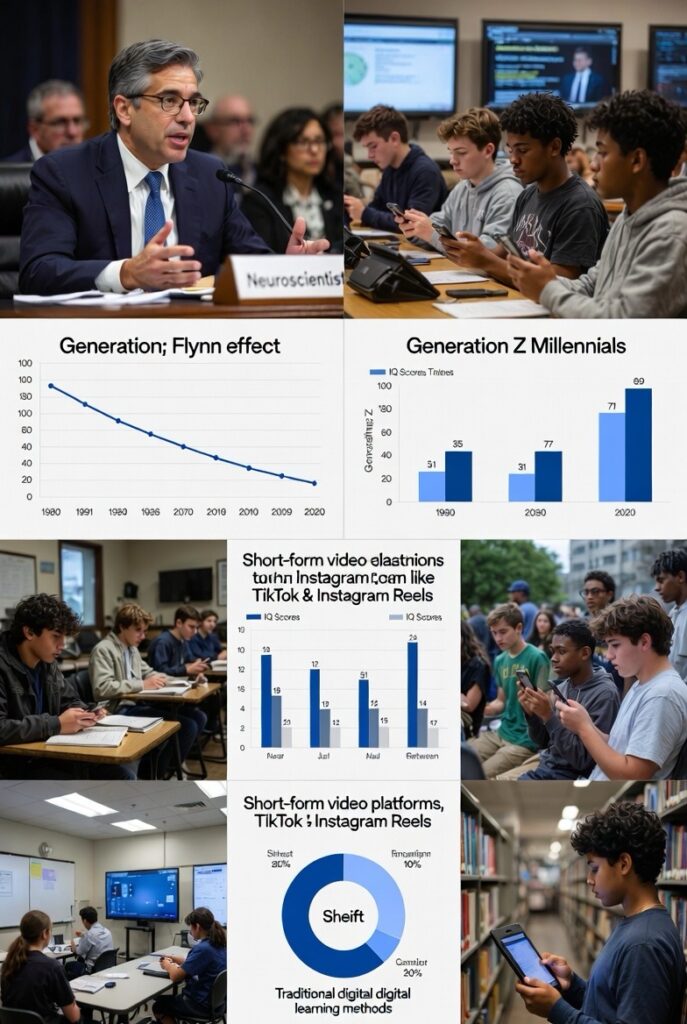
In a groundbreaking revelation that has sparked global debate, cognitive neuroscientist Dr. Jared Cooney Horvath testified before the U.S. Senate Committee on Commerce, Science, and Transportation in January 2026. He declared that Generation Z (born roughly 1997–2012) is the first generation in modern history to underperform their predecessors—including Millennials—across key cognitive measures. This marks a dramatic reversal of the long-standing Flynn effect, where IQ scores rose steadily for over a century.
Dr. Horvath, a former teacher and director of LME Global, stated: “Gen Z is the first generation in modern history to underperform us on basically every cognitive measure we have—from basic attention to literacy, to numeracy, to executive functioning and even general IQ—even though they go to more school than we did.”
This alarming trend, supported by international data and recent studies, points to widespread declines in attention span, memory, reading comprehension, mathematics skills, problem-solving abilities, and overall IQ scores among Gen Z compared to Millennials.
Understanding the Reverse Flynn Effect: Why IQ Scores Are Dropping
The Flynn effect, named after researcher James Flynn, documented consistent IQ gains of 3–5 points per decade throughout the 20th century, attributed to better nutrition, education, and environmental factors. However, evidence of a reverse Flynn effect—declining IQ scores—has emerged in multiple countries since the early 2000s or around 2010.
Recent analyses, including U.S. data from 2006–2018 and studies in Norway, Denmark, the UK, and France, show drops in verbal reasoning, matrix reasoning, and numerical skills. A Northwestern University study highlighted consistent negative trends in most cognitive domains, with the steepest declines among 18–22-year-olds—the core Gen Z demographic.
Dr. Horvath’s Senate testimony emphasized that this reversal accelerated around 2010, coinciding with the explosion of smartphones, social media, and educational technology (EdTech) in schools. Despite more years of formal education and instant access to information, cognitive performance has stalled or reversed.
Key Factors Behind Gen Z’s Cognitive Decline According to Experts
Dr. Horvath and supporting research attribute much of the decline to over-reliance on digital tools:
- Heavy screen time in education — Students using computers or tablets for extended periods (5+ hours daily) score significantly lower—often by more than two-thirds of a standard deviation—than those with limited exposure.
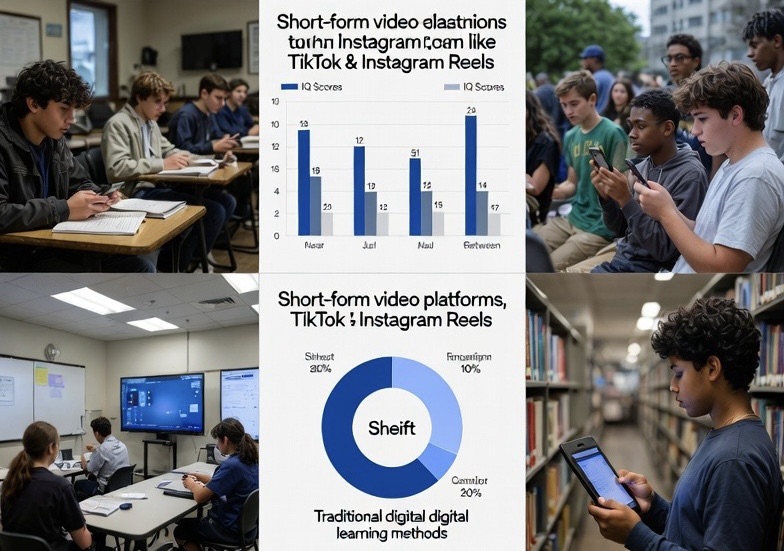
- Short-form content and multitasking — Platforms like TikTok, Instagram Reels, and rapid-switching apps train fragmented attention rather than deep focus, hindering neural pathways for complex thinking and retention.
- Mismatch between brain development and digital design — Human cognition thrives on sustained, face-to-face interaction, deep reading, and analog processing—not constant notifications, shallow summaries, or gamified distractions common in EdTech.
Broader contributors to the reverse Flynn effect include potential environmental toxins, reduced real-world problem-solving, mental health challenges, and pandemic disruptions. However, the timing strongly implicates technology’s role.
Gen Z Strengths: Not All Intelligence Metrics Tell the Full Story
While traditional IQ tests show declines, intelligence is multifaceted. Gen Z often excels in areas not fully captured by standard measures:
- Digital fluency and adaptability — Navigating information-rich, fast-paced environments with ease.
- Visual-spatial processing — Some studies note improvements in 3D rotation and spatial reasoning.
- Empathy and social awareness — Heightened sensitivity to global issues, activism, and inclusivity.
These strengths highlight that Gen Z may possess a different cognitive profile suited to a digital world, even as core academic skills lag.
Implications for Education, Workforce, and Society
The shift raises urgent concerns:
- Workforce readiness — Lower executive function and problem-solving could impact innovation and economic competitiveness.
- Education policy — Over-dependence on EdTech without proven efficacy risks long-term harm.
- Global trend — Studies in dozens of countries show similar patterns, prompting calls for reform.
Countries like Denmark have piloted reduced classroom tech to prioritize traditional methods.
Solutions: Balancing Technology with Brain-Healthy Learning
Experts advocate intentional changes:
- Hybrid models — Combine digital tools for targeted practice with emphasis on hands-on activities, discussions, deep reading, and analog skills.
- Screen time limits — Promote focused, single-task learning and reduce recreational use.
- Policy safeguards — Demand evidence-based EdTech, privacy protections, and developmental guidelines.
- Parental and educator focus — Encourage “deep work” habits to rebuild attention and critical thinking.
Dr. Horvath stresses: “Our responsibility is not to maximize screen exposure, but to maximize the cognitive capacity and long-term flourishing of the next generation.”
Conclusion: A Wake-Up Call for the Digital Age
The claim that Gen Z is less intelligent than Millennials is provocative yet backed by Senate testimony, IQ data, and global trends. While headlines focus on decline, the issue reflects how modern environments reshape cognition—not inherent inferiority.
With mindful adjustments—prioritizing human interaction, sustained focus, and balanced tech use—society can help future generations build sharper, more resilient minds. This moment demands action from parents, educators, policymakers, and tech developers to ensure technology serves human potential rather than undermines it.